Company News · June 2026
Isango Enterprises Opens Its Doors: A New Chapter Begins

June 2026 marks the official launch of Isango Enterprises — a proudly South African, multi-service business built on a simple idea: reliable work, delivered honestly, across more than one trade.
The name Isango is deliberate. In isiXhosa and isiZulu, an isango is a gate — the point of passage between where you are and where you're trying to get to. That's the role we set out to play for the businesses, institutions and households of the Eastern Cape: one gateway into four different disciplines, rather than four separate relationships to manage.
Why four divisions, not one?
Most service providers specialise narrowly, and there's a real logic to that. But in practice, the organisations we spoke to before starting Isango kept describing the same frustration: a function needs catering and an electrician for the venue and a supplier for the stock and someone to help pull the sponsorship proposal together — and each of those is a different phone number, quote, and invoice.
Isango Enterprises was incorporated to close that gap. Catering, Supply & Delivery, Business Development, and Electrical & Solar now operate under one company, one standard of accountability, and one point of contact.
What hasn't changed
Each division is run by people who know their trade — this isn't a generalist doing four jobs badly. It's four specialisms, coordinated properly, so the client experience is simpler without the underlying work becoming shallower.
"An isango is not the destination. It's what makes the destination reachable." — Isango Enterprises founding note
We're based in Selborne, Eastern Cape, registered with the CIPC, and proud to be building this as a B-BBEE Level 1 contributor from day one. If you've got a project that needs one or all four of our divisions, we'd like to hear from you.
Get in touch with Isango →
Catering · June 2026
More Than a Meal: Catering With Purpose in the South African Context

In South Africa, food is rarely just food. It's how a funeral becomes a gathering, how a wedding becomes a celebration of two families, how a boardroom lunch signals that a client is valued.
That context shapes how we think about catering at Isango. A menu built for a corporate strategy session looks nothing like one built for a community heritage day — not because the ingredients are wildly different, but because the occasion demands a different kind of attention.
What "catering with purpose" actually means
- Reading the room, not just the headcount. A funeral repast, a matric farewell and a government stakeholder briefing all need very different pacing, presentation and service style.
- Respecting dietary and cultural realities. Halal, vegetarian, and traditional dishes are planned in from the start, not bolted on as an afterthought.
- Local sourcing where it makes sense. Supporting Eastern Cape suppliers keeps quality high and money circulating locally.
- Consistency under pressure. A 300-plate conference buffet has to look and taste as good at 1pm as it did when it was plated at 11am.
Why hygiene and presentation aren't optional extras
South African consumers and event organisers are increasingly attentive to food safety, and rightly so. Our catering team works to disciplined food-handling practices at every stage — preparation, transport, holding temperature and service — because a beautifully presented dish that isn't handled safely isn't a success.
Whether it's a boardroom lunch for twelve or a community event for three hundred, our goal is the same: food that's fresh, appropriate to the occasion, and served by people who understand why the meal matters.
Explore our Catering division →
Electrical · July 2026
Wired Right: Why Regulated Electrical Work Protects Every SA Property
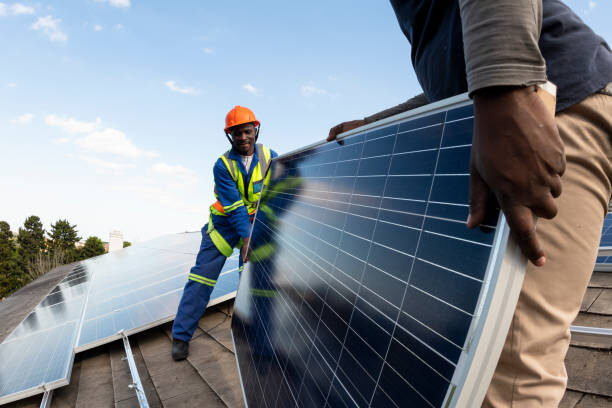
Electrical work is one of the few trades in South Africa where cutting corners doesn't just risk a bad outcome — it can be illegal, uninsurable, and dangerous, all at once.
Under the Occupational Health and Safety Act, any electrical installation work performed in South Africa must be carried out in line with SANS 10142-1, the national wiring code, and must be certified by a person registered with the Department of Employment and Labour before it can legally be signed off.
What a Certificate of Compliance actually protects
- Your insurance claim. Many insurers will not pay out on a fire or electrical damage claim if the installation lacks a valid CoC.
- Your property sale. A valid electrical CoC (no older than two years) is a legal requirement when transferring property in South Africa.
- The people in the building. Faulty DB boards, incorrect earthing and overloaded circuits are a leading cause of residential and commercial fires.
Common issues our team finds on inspection
Ageing distribution boards without proper earth leakage protection, DIY additions that bypass circuit breakers, and undersized cabling on retrofitted appliances are among the most frequent faults we encounter — often in homes and small businesses that had no idea the risk existed.
"A Certificate of Compliance is not a formality. It's the paper trail that proves the work was done to a standard that keeps people safe."
Whether you need a new installation, a fault diagnosed, or simply want peace of mind before a property sale, our Electrical & Solar division works strictly to SANS 10142-1 and issues the compliance documentation you need to protect the property — and the people in it.
Explore our Electrical & Solar division →
Electrical · July 2026
Beyond Loadshedding: Solar and Backup Power Solutions
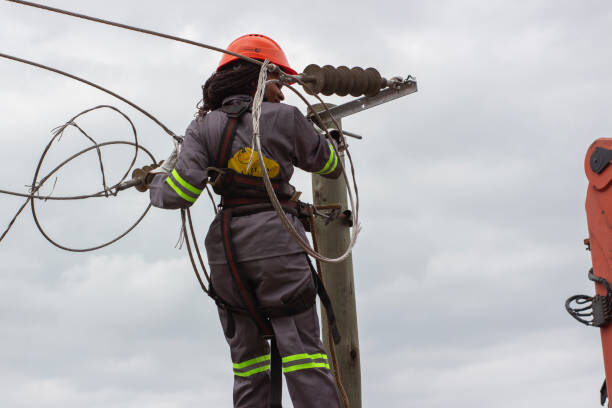
A few years of scheduled outages changed how South Africans think about electricity, permanently. Backup power moved from a nice-to-have to a basic requirement for keeping a household running or a business trading.
But "getting solar" is a bigger decision than it first appears — sizing it wrong wastes money in one direction, and leaves you without power in the other.
Start with a load audit, not a shopping list
Before recommending any inverter, battery or panel configuration, we look at what actually needs to stay powered — lights, WiFi and a few plug points look very different from a full kitchen, security system and borehole pump. Sizing the system around real usage avoids both overspending and disappointment.
Grid-tied, hybrid, or full backup?
- Grid-tied solar reduces your daytime Eskom or municipal bill but offers no backup during an outage unless paired with storage.
- Hybrid systems combine solar generation with battery storage, giving you savings during the day and backup power at night or during outages.
- Inverter-and-battery-only backup (no solar) keeps essentials running through an outage without the investment in panels — a common starting point for renters or smaller budgets.
Registration matters too
Grid-tied and hybrid systems typically need to be registered with your local municipality or Eskom as a Small-Scale Embedded Generator (SSEG). Skipping this step can create problems later, from insurance disputes to issues at resale — our team handles this registration process as part of the installation.
Whatever stage you're at — a first backup system for load shedding, or a full solar retrofit — our Electrical & Solar division designs, installs and certifies the system properly, from the load audit through to sign-off.
Explore our Electrical & Solar division →
Business Development · July 2026
Business Basics: What to Get Right Before You Start

Most new South African businesses don't fail because the idea was bad. They fail because the unglamorous groundwork — registration, compliance, structure — never got properly laid.
Before the first client, the first invoice or the first hire, a handful of decisions quietly determine how much friction your business will face in year one.
1. Register the business properly, from the start
A CIPC registration is the foundation — it's what lets you open a business bank account, apply for tenders, and be taken seriously by corporate and government clients. Trying to trade informally for "just a while longer" almost always costs more to untangle later than it would have to set up correctly from day one.
2. Understand what B-BBEE status actually unlocks
For many South African businesses, especially those seeking corporate or government contracts, B-BBEE verification isn't red tape — it's a genuine competitive advantage. Knowing your contributor level, and what it takes to improve it, should be part of the plan from the beginning, not an afterthought when a tender document asks for it.
3. Separate the business from the person
Mixing personal and business finances is one of the most common — and most expensive — early mistakes. A dedicated business bank account, a proper chart of accounts, and clean bookkeeping from the first transaction make everything downstream easier: tax, loans, investors, and your own sense of whether the business is actually profitable.
4. Get your paper trail in order early
- Company registration documents and a B-BBEE certificate or affidavit
- A clear, simple business profile you can send to any prospective client
- Basic contracts or terms of service for the work you do
- A tax reference number and clarity on your VAT registration threshold
"The businesses that struggle most in year two are rarely the ones with a weak idea. They're the ones still fixing what should have been sorted in year one."
None of this needs to be overwhelming, and it doesn't need to be done alone. Our Business Development division works with founders and existing business owners on exactly this groundwork — registration support, B-BBEE readiness, business profiles, proposals and the structure that lets a good idea actually hold up under growth.
Explore our Business Development division →